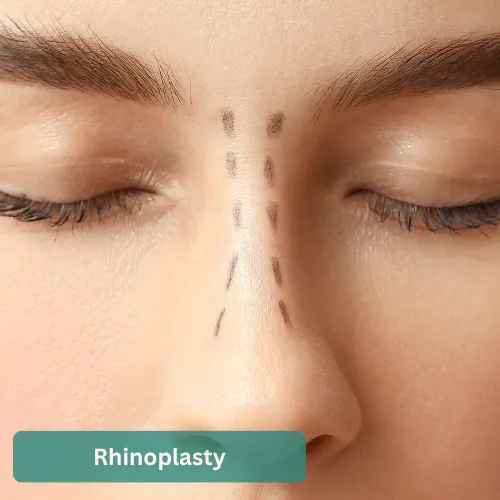
Rhinoplasty in Manchester
Nose Reshaping Surgery
Recovery
2–3 weeks
Anaesthesia
General
Duration
2–3 hours
About Rhinoplasty
Rhinoplasty — commonly called a nose reshaping or nose job — is one of the most technically demanding procedures in facial surgery, and it is an area in which Mr. Khalil has built an international reputation. Because the nose sits at the centre of the face, even millimetre changes to the bone and cartilage alter the balance of every other feature. The aim is never a "generic" nose, but a natural result that suits your face, respects your ethnicity, and preserves — or improves — how you breathe.
Who is a good candidate for rhinoplasty?
Rhinoplasty suits adults whose facial growth is complete (typically 18 and over) who are troubled by a dorsal hump, a drooping or bulbous tip, a crooked bridge, or asymmetry after injury. It is equally suitable if you have a functional concern such as a deviated septum or difficulty breathing through the nose. The best candidates are in good general health, are non-smokers or willing to stop before and after surgery, and hold realistic expectations. Mr. Khalil also sees many patients seeking revision rhinoplasty to correct the results of previous surgery elsewhere.
What does rhinoplasty with Mr. Khalil involve?
Surgery is carried out under general anaesthetic and usually takes two to three hours. Depending on your anatomy and goals, Mr. Khalil uses either a closed technique (all incisions hidden inside the nostrils) or an open technique (a tiny, well-concealed incision across the columella) that gives greater precision for tip and revision work. The underlying bone and cartilage are reshaped, refined, or grafted to build lasting support, and a lightweight splint is applied to protect the new shape. Functional correction, such as septal work, can be performed at the same time.
What is recovery like after rhinoplasty?
The external splint stays on for about seven to ten days, after which most people feel comfortable returning to work or study. Bruising and swelling around the eyes settle over the first two to three weeks, and you should avoid strenuous exercise, contact sport, and glasses resting on the bridge for around six weeks. The nose continues to refine gradually: you will see a pleasing change early on, but the final, fully settled result emerges over roughly twelve months as the last of the deep swelling resolves.
Rhinoplasty — frequently asked questions
Will rhinoplasty change how I breathe?expand_more
It can improve it. Where a deviated septum or internal obstruction is contributing to blocked breathing, functional correction is performed alongside the cosmetic reshaping so form and function are addressed together.
What is the difference between open and closed rhinoplasty?expand_more
Closed rhinoplasty places all incisions inside the nostrils; open rhinoplasty adds a tiny external incision on the columella for greater visibility and control. Mr. Khalil selects the approach that best suits your anatomy and goals at consultation.
When will I see the final result?expand_more
You will notice an improvement once the splint is removed at around a week, but subtle refinement continues for up to twelve months as swelling fully resolves — this is normal and expected.
How much does rhinoplasty cost in Manchester?expand_more
The fee depends on whether the surgery is primary or revision and on its complexity. A precise, all-inclusive quote is given after your consultation; current guide pricing is on the price list.
Rhinoplasty — Before & After
Images published with full patient consent. Individual results may vary.